Investment property depreciation schedules are one of the most effective, and often underused, tools for maximising tax deductions on Sydney investment properties. A properly prepared schedule can deliver thousands of dollars in additional annual deductions, improving cash flow and after‑tax returns without changing the property itself.
What A Depreciation Schedule Actually Is
A depreciation schedule is a detailed report that lists every eligible component of your investment property that loses value over time and calculates how much you can legally claim each year as a tax deduction. In Australia, these deductions fall into two main categories:
- Division 43 capital works (the building and structural elements).
- Division 40 plant and equipment (fixtures and fittings).
For most residential investors in Sydney, Division 43 is the more significant deduction, because the structure of a qualifying building can usually be depreciated at 2.5% per year over 40 years from its construction or major renovation date.
Division 43: Capital Works Deductions
Division 43 covers the “bricks and mortar” of your investment property:
- Foundations, walls, roof and concrete.
- Plumbing, electrical wiring and built‑in joinery.
- Fixed tiling, permanently attached flooring and some external works.
If the property was built after 15 September 1987, you can generally claim 2.5% of the construction cost each year for up to 40 years. Importantly, this 40‑year life resets for qualifying renovations or extensions, which means a 25‑year‑old Sydney apartment that has undergone a substantial renovation may still have decades of deductions available.
Division 40: Plant and Equipment
Division 40 applies to items that are removable or have a shorter effective life, such as:
- Appliances (ovens, dishwashers, rangehoods).
- Air conditioning units.
- Blinds, carpets and some light fittings.
These items are depreciated using either:
- The diminishing value method (higher deductions in earlier years).
- The prime cost method (fixed deductions over the effective life).
Recent legislative changes limit claims on second‑hand plant and equipment in residential properties, but new builds and newly installed assets in income‑producing properties still attract deductions under Division 40. This is one reason why a fresh schedule is essential whenever you significantly update an investment property.
How Depreciation Maximises Cash Flow for Sydney Investors
The primary benefit of a depreciation schedule is that it reduces your taxable income without requiring any additional cash outlay. For a typical Sydney investment property:
- A 10–30‑year‑old dwelling with past renovations may have around $65,000 in capital works deductions still available.
- At 2.5% per year, that equates to approximately $1,625 per year in Division 43 deductions alone, potentially more when qualifying plant and equipment is included.
For investors on higher marginal tax rates, this can translate into several thousand dollars of tax saved each year, improving net rental yield and making it easier to hold quality assets in blue‑chip Sydney suburbs with tighter cash flow margins.
Why ATO‑Compliant Schedules Matter
The Australian Taxation Office sets strict rules around how depreciation must be calculated, including effective lives, start dates and apportionment for private use. To satisfy these requirements:
- A schedule should be prepared by a suitably qualified quantity surveyor who can estimate historical construction costs and asset values where invoices are not available.
- The report must separate Division 43 and Division 40 items and show annual deductible amounts for each year of ownership, often across a 40‑year timeframe.
Generic estimates or sales brochure figures are not considered sufficient for ongoing tax claims; professional firms emphasise that you need a personalised, property‑specific schedule to maximise and substantiate deductions.
How Long A Depreciation Schedule Lasts
For most Sydney residential investment properties, a properly prepared schedule will last up to 40 years and usually only needs to be created once.
- The schedule starts from when the property is first used to produce income (generally settlement or first lease date).
- You then reuse the same schedule each year when lodging your tax return.
- If significant improvements or renovations are made, an update or addendum may be required so those new works are captured and depreciated correctly.
If you have owned an investment property for some time but have never claimed depreciation, many providers can prepare a retrospective schedule and your accountant may be able to amend prior year returns within the allowable ATO amendment period.
Typical Costs Versus Benefits
In Sydney, specialist firms indicate that residential depreciation schedules typically start from around $600 plus GST, with the fee itself being tax‑deductible. In return:
- Many providers present a 40‑year forecast table showing annual deductions under both prime cost and diminishing value methods, enabling your accountant to choose the approach that best suits your circumstances.
- Some offer guarantees that if they cannot identify at least double their fee in first‑year deductions, they will not charge for the report, underlining how substantial these benefits usually are.
For a leveraged investor holding multiple Sydney properties, the cumulative effect of maximised depreciation across the portfolio can materially improve after‑tax returns and help service loans more comfortably.
Sydney‑Specific Considerations for Depreciation
The age, type and location of Sydney investment properties influence the scale and mix of depreciation benefits:
- Newer high‑rise apartments in areas such as Mascot, Green Square or Parramatta often have substantial plant and equipment components (lifts, air‑conditioning, common facilities), generating strong early‑year deductions.
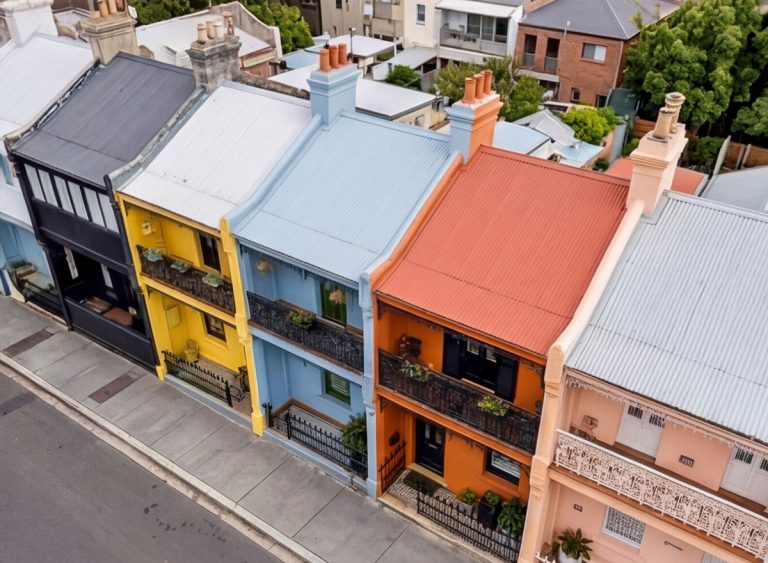
- Older terrace houses and strata units in the Inner West or Eastern Suburbs may have less plant and equipment but significant qualifying renovations and structural value that still attract Division 43 claims.
- Commercial and mixed‑use properties across Sydney can access both Division 43 and Division 40, often with higher overall claimable amounts due to specialised fit‑outs and specialised equipment.
Because so many Sydney properties have undergone staged renovations over decades, a key advantage of using a specialist is their ability to identify and cost those works, even where records are incomplete, so investors do not leave legitimate deductions unclaimed.
Practical Steps to Maximise Your Depreciation Deductions
To make the most of investment property depreciation in Sydney, we recommend that property investors:
- Engage a reputable quantity surveyor
Choose a firm with clear experience in ATO‑compliant residential and commercial schedules in the Sydney market, and ensure they will liaise directly with your property manager or tenants to inspect the property where required. - Order the schedule as soon as possible after purchase
Obtaining a schedule soon after settlement ensures you capture full first‑year deductions and minimise the risk of missing claimable amounts in early years. - Coordinate with your accountant
Ask your accountant to:- Integrate both Division 43 and Division 40 figures into your annual return.
- Consider whether diminishing value or prime cost produces the optimal outcome for your tax position.
- Review the possibility of amending past returns if you previously failed to claim depreciation within the ATO amendment window.
- Update schedules after major works
Any significant renovation, extension or structural upgrade should trigger a review or addendum so the new capital works and assets are included and depreciated from the correct date.
How We, as Buyers’ Agents, Fit Into Your Depreciation Strategy
At Buyer’s Domain in Leichhardt, we work with Sydney investors to ensure that depreciation potential is considered from the acquisition stage, not as an afterthought. As experienced buyers’ agents, we connect clients with trusted quantity surveyors and accountants who can prepare robust schedules and integrate them into a broader investment strategy.
By combining intelligent asset selection with a well‑crafted depreciation schedule, property investors can significantly enhance the net performance of their Sydney portfolios while staying fully compliant with ATO rules.
To discuss how to incorporate depreciation planning into your next Sydney investment purchase, connect with our team of specialist buyers’ agents.
Please note that the information contained in this article is general only. Investors should discuss all financial and investment decisions with their accountant and financial advisors.