More Negotiating Power but Less Borrowing Power
There is an interesting contradiction emerging in the Sydney property market, and it is one that prospective buyers need to understand before making their next move.
On the one hand, auction clearance rates have fallen considerably, vendors are finding it harder to achieve their price expectations and properties that might have attracted multiple bidders a year ago are now sitting on the market for considerably longer. Yet, just as the balance of power is beginning to shift towards buyers, the cost of borrowing has increased and the amounts that many households can afford to borrow and spend have been significantly reduced.
In other words, whilst buyers have more negotiating power many have considerably less purchasing power. It is a tantalising combination, particularly for first home buyers who were already struggling to get a foothold in the Sydney market.
A market that is finally giving buyers some breathing room
The latest auction figures provide a useful indication of just how much conditions have changed. Sydney’s final auction clearance rate was 45.1% for the week ending 1 November, compared with approximately 66% during the corresponding period last year. Auction volumes were also down by more than a third year on year, suggesting that both buyer activity and vendor confidence have weakened.
According to Cotality’s October Home Value Index, Sydney dwelling values fell by 1.6% during October and are now 9.4% lower than they were a year ago. More significantly, values are 10.1% below their February 2026 peak. These figures cover houses and units combined, rather than just median house prices, but they demonstrate the extent of the correction that has taken place in Sydney over the past eight months.
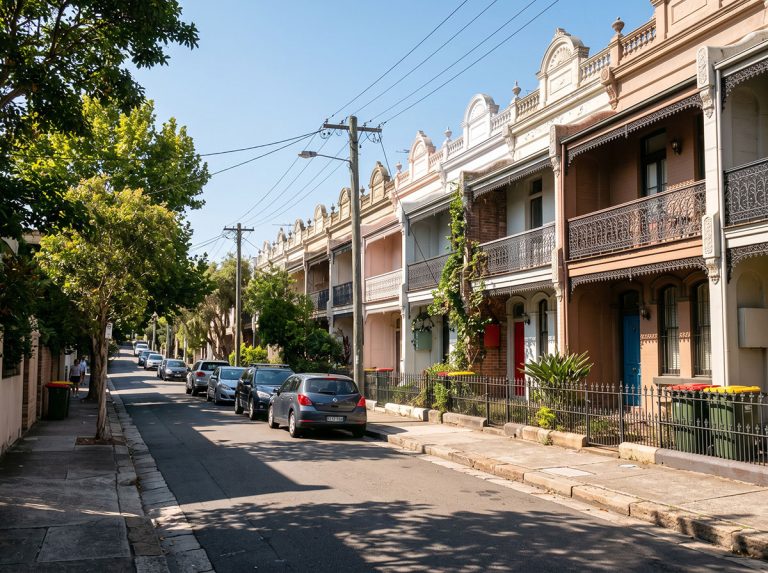
There is no need to suggest that the market has fallen apart, because it hasn’t. Good properties in desirable locations in areas like the Inner West continue to attract attention and there are still plenty of buyers prepared to compete for something special. However, the broader market is undoubtedly more challenging for vendors, and that creates opportunities for buyers who understand how to negotiate.
I am seeing a market in which buyers can afford to be more discerning; unsuccessful auctions are creating opportunities for private negotiations; and vendors who have been on the market for several weeks are increasingly having to reassess their expectations. This is a considerable change from the conditions many buyers experienced over the past few years, when competition often left little room for negotiation.
Then came five interest rate increases
Unfortunately, there is another side to this story. On 3 November, the Reserve Bank increased the cash rate by another 0.25 percentage points to 4.85%, marking the fifth increase this year and taking official rates to their highest level since 2008.
The impact on prospective buyers goes well beyond the additional monthly mortgage repayment. Banks assess whether borrowers can comfortably service their loans at interest rates considerably higher than the actual rate being charged, and increases in lending rates can have a substantial affect on borrowing capacity. Buyers who obtained pre-approvals earlier in the year should not assume that their original budgets remain achievable, particularly if their financial circumstances or lender assessment have changed.
I recently heard of a first home buyer, through a mortgage broker, whose borrowing capacity had fallen from $920,000 to just $650,000. That is a reduction of $270,000, or almost 30%, and it illustrates the predicament facing some buyers far better than any number of market forecasts.
Try finding a decent property in Sydney’s Inner West for $650,000, even after the recent price correction. The irony is that the market may be offering better opportunities to negotiate, but some buyers simply no longer have the borrowing capacity to pursue them.
The first home buyer policy contradiction
This brings me to one of the more frustrating aspects of the current housing debate. Anthony Albanese has repeatedly promoted the Government’s intentions in the last Federal Budget to help first home buyers and tackle “intergenerational equity”.
The latest figures suggest that, despite the Government’s efforts, first home buyers are finding it increasingly difficult to enter the market. ABS lending data released this week shows that the number of first home buyer loans in NSW fell by 10% over the year to September. Nationally, first home buyer lending fell by 8.6% in the September quarter alone. At a time when the Government is supposedly making it easier for first home buyers to enter the market, fewer are actually managing to do so. Rising interest rates and the resulting reduction in borrowing capacity are clearly taking their toll.
But there is an even more concerning consequence for those who have already bought. The Government’s expanded 5% Deposit Scheme allowed eligible buyers to purchase with very little equity in their properties. Now, with property values falling, some of those buyers are discovering that they owe the bank more than their homes are worth.
PropTrack estimates that around 480 households who purchased under the scheme were already in negative equity by August this year, with that number having increased substantially from 87 in the preceding month. These are people who took advantage of a Government initiative intended to help them achieve home ownership, only to find that falling property values have wiped out their initial equity and left them owing more than their properties are worth.
Albanese might call this improving intergenerational equity. I suspect the first home buyers who are now underwater on their mortgages would have a rather different view.
Not all properties are experiencing the same market
One thing I would caution buyers against is assuming that a softer market means every property represents an opportunity. Sydney is a large and diverse market, and the difference between a well-located home with sound fundamentals and an overpriced property with significant shortcomings can be considerable.
Good homes in desirable streets, close to transport, schools and local amenities, will continue to attract competition. Meanwhile, properties that have been poorly presented, overpriced or compromised by their location or condition may struggle to find a buyer. Understanding that distinction is particularly important when interpreting auction clearance rates and reports of falling property values.
An unsuccessful auction can present an excellent opportunity to negotiate with a vendor, particularly where a property has been on the market for some time and the owner’s expectations have become more realistic. However, a discount against an unrealistic asking price does not necessarily represent good value. Buyers still need to understand what a property is genuinely worth, what comparable properties have sold for and whether there are any underlying issues that should influence their offer.
This is where experience and proper due diligence become particularly important. The objective should never be to buy something simply because the market has softened; it should be to secure the right property at the right price.
So, should you be buying now?
I wouldn’t suggest that anyone should rush into a purchase simply because auction clearance rates have fallen or interest rates have increased. Equally, I wouldn’t recommend sitting on the sidelines waiting for some mythical point at which property prices have reached the bottom of the market. By the time that becomes obvious, buyer confidence and competition may already have returned.
Over the past 17 years, I have bought through very different market conditions, including periods of intense competition, rising interest rates and considerable uncertainty among both buyers and vendors. One thing I have learnt is that successful buyers are rarely those who spend their time trying to predict exactly where the market is heading. They are the ones who understand their financial position, recognise value when they see it and are prepared to act when the right opportunity presents itself.
For anyone considering a purchase over the coming months, I would start by revisiting your borrowing capacity with your mortgage broker, particularly if your pre-approval was obtained before the latest rate increases. Establish a realistic spending limit, take the time to understand comparable sales and be prepared to negotiate rather than simply accepting a vendor’s asking price. Consider other bargaining points that could help secure a sharper price, such as settlement timing or deposit terms. Most importantly, don’t allow a softer market to persuade you to compromise on the quality of the property you are buying.
There are undoubtedly opportunities emerging in Sydney, but they won’t be available to everyone. Buyers who have maintained their borrowing capacity, have their finances in order and understand what constitutes good value could find themselves in a particularly advantageous position. For those who have been priced out or have seen their borrowing capacity significantly reduced, the challenge is considerably greater.
The current market presents an unusual situation: buyers have more negotiating power than they’ve had for some time, but many have less money available to spend. Knowing how to make the most of that opportunity is becoming increasingly important.
At Buyer’s Domain, I work exclusively for property buyers across Sydney, personally managing the search, assessment, negotiation and acquisition process. With more than 17 years in the industry and over 430 properties secured, I understand the difference between a property that simply looks attractive on paper and one that represents a sound purchase.
If you’re considering buying over the coming months, I’d welcome the opportunity to discuss your requirements, establish what is achievable within your budget and help you identify opportunities in the current market.
Book a confidential strategy conversation with Nick Viner