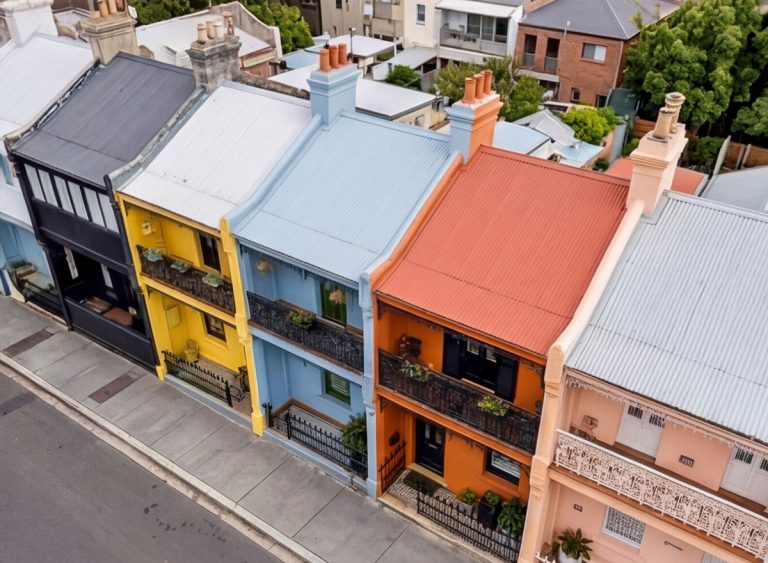
The latest Federal Budget has not “killed” property investment in the Inner West, but it has changed the rules of the game. We believe that informed, strategic buyers can still use this Budget to their advantage if they understand what still works, where new opportunities may lie, and how to reposition their portfolios before 1 July 2027.
The New Budget Landscape: What Has Actually Changed?
From 1 July 2027, negative gearing will be limited to new residential builds, and the long‑standing 50 per cent CGT discount will be replaced with an indexation‑based method plus a minimum tax of 30% on capital gains. Existing investment properties are expected to be grandfathered, with the new CGT rules applying only to capital gains that accrue after 1 July 2027, and then only if you sell.
The policy objective is to rebalance incentives towards new housing supply and away from speculative activity in established stock. For Inner West buyers, however, the practical question is more nuanced: where does capital now work hardest, given the new rules, local supply constraints, and the ongoing strength of Sydney’s inner and middle‑ring markets?
Your Principal Residence: Still the Most Powerful Tool
The Budget retains the fundamental tax advantages of the Principal Place of Residence (PPOR). Your home remains exempt from CGT, and the 6-year absence rule may still allow certain owners to retain CGT main residence treatment even after moving out, subject to eligibility.
In our experience, many Inner West households have historically prioritised additional investment properties over upgrading their own home. Under the new regime, this strategy deserves to be revisited. Redirecting capital from less tax‑efficient investments into paying down non‑deductible home debt or trading up into a more valuable PPOR can materially improve after‑tax outcomes, even if gross yields on investment property appear attractive.
In practical terms, this is likely to mean:
- Selling selected investment properties before 1 July 2027 and reallocating proceeds into your PPOR via lump‑sum debt reduction; or
- Re-allocating proceeds and using any remaining borrowing capacity to optimize loan structure to upgrade to a higher quality family home in a superior location.
In tightly held Inner West suburbs such as Balmain, Haberfield, Russell Lea and Rodd Point, we expect increased capital rotation into owner‑occupied housing to place upward pressure on the limited stock of quality family homes. These markets already perform above the Sydney average over the long term due to scarcity, school catchments, village amenity and transport connectivity, and we do not expect the Budget to change those structural advantages.
With apartments, superior home owner quality assets such as art deco units in blue chip locations not impacted by any rezoning changes are likely to outperform the rest of the apartment sector.
Overall, we do not expect the Budget to assist first‑home buyers into established family homes in the Inner West in any meaningful way. In fact, we anticipate that capital freed from less tax‑efficient investment structures will increasingly flow into high‑quality PPOR purchases, intensifying competition for scarce stock.
Negative Gearing: Not Abolished, but Reshaped
Despite headlines, negative gearing has not disappeared. Several key negative gearing benefits will continue to apply for Inner West property buyers:
- Negative gearing benefits on new residential investments: Will apply to newly built or off‑the‑plan dwellings from 1 July 2027. Existing negatively geared properties are expected to retain their current treatment under grandfathering provisions
- Unused tax losses: may be used against:
-
- Rental income from other residential properties either in the same year; or
- Residential rental income in future years; or
- Capital gain on the eventual sale of the property
- Commercial property: Remains outside the residential restriction. Negative gearing on qualifying commercial investments will continue to allow net rental losses (from established commercial properties as well as new commercial properties) to be offset against other income, subject to structure and advice. For investors who value the cash‑flow smoothing that negative gearing provides, this distinction between commercial and residential is significant.
CGT only on Sale
The CGT changes will impact both existing residential properties and new and existing commercial properties but of course, these changes will only crystallise if you sell. Gains that have accrued prior to 1 July 2027 will still be treated under the current rules, and only the post‑2027 portion will be subject to the new indexation and minimum tax regime. Many long‑term investors already pursue a “never sell” philosophy, using equity release and portfolio restructuring rather than disposals. For such investors, the effective impact of the CGT change may be modest in the foreseeable future.
Commercial Property in the Inner West: A Quiet Budget Winner
Typical commercial property yields in Sydney are higher than residential yields, particularly for well‑located industrial and neighbourhood retail assets. By contrast, prime office assets are currently priced on tighter yields, while secondary stock trades at softer yields as investors price in vacancy and obsolescence risk.
For Inner West buyers, the most relevant sub‑sectors are typically:
- Mixed‑use and light industrial assets in corridors such as Marrickville, St Peters and Tempe, which benefit from proximity to both the CBD and the airport, as well as major infrastructure upgrades.
- Neighbourhood retail and medical spaces within established centres like Leichhardt, Annandale and Petersham, where strong local demographics and limited competing stock can underpin relatively defensive income streams.
We have extensive experience identifying and acquiring commercial assets for clients from Marrickville to St Peters and from Leichhardt to Alexandria, where zoning, tenant profile and building configuration all materially influence long‑term performance. In the post‑Budget world, the combination of stable yields, ongoing negative gearing and potential uplift from infrastructure and rezoning makes selected commercial opportunities particularly compelling for sophisticated investors.
Residential versus commercial: strategic comparison
| Investment Consideration | Residential (existing) | Residential (new / off‑the‑plan) | Commercial |
| Negative gearing | Grandfathered; no new benefit for post‑2027 purchases | Available for new builds even after 1 July 2027 | No changes to current rules (will continue to apply even to existing commercial property) |
| CGT treatment | Part pre‑2027 / part post‑2027 under new rules | 50% discount continues or choice to apply new arrangements | Part pre‑2027 / part post‑2027 under new rules |
| Yield profile | Lower gross yield, higher capital growth historically | Slightly higher yields, often higher vacancy and build risk | Higher yields typical for well‑selected assets |
New Residential Supply: Carve‑outs and Caution
The Budget deliberately channels tax support towards new residential supply, particularly apartments and townhouses that can be delivered at scale in well‑located, serviced suburbs. In New South Wales, this aligns with State‑level zoning reforms such as Transit‑Oriented Development, Low and Mid‑Rise Housing reforms and, in the Inner West, the Inner West Council’s “Our Fairer Future Plan”, all of which seek to increase allowable densities near transport and amenity.
From an investor’s perspective, this means that:
- New and off‑the‑plan projects that qualify for the negative gearing carve‑out may enjoy enhanced demand from investors seeking to preserve tax efficiency, especially in suburbs with strong owner‑occupier appeal and high walkability.
- Developers with strong balance sheets and a track record of delivery should be better placed to accelerate projects that respond to both the tax settings and underlying demand for well‑located apartments.
We acknowledge the well‑documented concerns about some high‑density new builds in Sydney, including construction quality, defect risk, over‑supply pockets and limited capital growth in purely investor‑driven towers. These risks are genuine. However, they are not universal. Reputable developers who focus on design, build quality and owner‑occupier specifications, rather than minimum‑cost investor stock, can still deliver assets with solid long‑term fundamentals.
In the Inner West specifically, there is likely to be a divergence between:
- Commodity‑style small units in over‑supplied pockets such as busy road corridors like Parramatta Road, where additional tax incentives may not fully offset weak demand or high owners corporation levies.
- Well‑designed, boutique developments in suburbs such as Leichhardt, Dulwich Hill and Marrickville, where buyers already pay a premium for quality, and where improved planning controls support medium‑density forms aligned with local character.
Action Plan for Inner West Buyers Before 1 July 2027
With the date of the main changes clearly signposted from 1 July, 2027, you have a genuine planning window. We recommend a structured approach that integrates your tax advice, finance strategy and acquisition plan.
- Clarify your primary objective
Determine whether your main priority is to upgrade your PPOR, restructure an existing portfolio for tax efficiency, or initiate a new investment strategy (residential, commercial or mixed). A clear objective will shape all subsequent decisions. - Audit your current portfolio and debt
Work with your accountant and mortgage adviser to map your existing properties, loan structures, gearing levels and cash flow under both the current and proposed regimes. Identify any assets that are under‑performing on a risk‑adjusted basis or that will be disproportionately affected by the new tax settings. - Obtain baseline valuations
For investors with established portfolios, obtaining independent valuations before 1 July 2027 will be critical to evidencing the pre‑change cost base and CGT position. This is particularly relevant where significant capital growth has already occurred and where future decisions may involve partial sales, subdivisions or redevelopment. - Decide what to sell, what to hold and what to buy
Using the above information, categorise your assets into:
-
- Properties to be sold before the new rules apply, because their forward‑looking risk‑return profile is weak.
- Properties to be held long term under grandfathered arrangements, especially where location, scarcity and tenant demand remain strong.
- Gaps in your portfolio (for example, no exposure to commercial, or insufficient PPOR quality) that should be filled through targeted acquisitions.
- Engage specialist buyers’ agents
The Inner West, South City Fringe and Bays Precinct‑adjacent markets are highly segmented, with micro‑pockets where small differences in street, orientation or build quality result in outsized valuation gaps. As specialist buyers’ agents based in Leichhardt, we use detailed local knowledge and data to identify assets that will remain desirable under a range of economic and policy scenarios, not just in the next 12 months. - Monitor legislative detail and market response
Finally, the Budget announcements must pass through Parliament, and implementation details may alter the practical impact of the reforms. We recommend ongoing monitoring of Government releases, reputable news outlets and major bank research so that your strategy can be adjusted as the rules crystallise.
If you would like us to translate these Budget changes into a tailored property acquisition or portfolio‑repositioning strategy in Sydney’s Inner West or beyond, we can work alongside your accountant and financial adviser to ensure that every purchase aligns with both the new tax settings and your long‑term goals.
The Federal Budget outlines Government intentions only. The relevant legislation has not yet been passed and the final form of the proposals may change or fail to proceed through Parliament.