Sydney’s Inner West has decisively shifted from its blue‑collar roots to become one of the most tightly held, high‑value residential regions in New South Wales, increasingly accessible only to higher‑income households. In this article, we examine how that transition occurred, why capital growth has been so pronounced, and why we expect well‑located, character family homes to continue to outpace the broader Sydney market over the medium term.
From working Harbour to prestige enclave
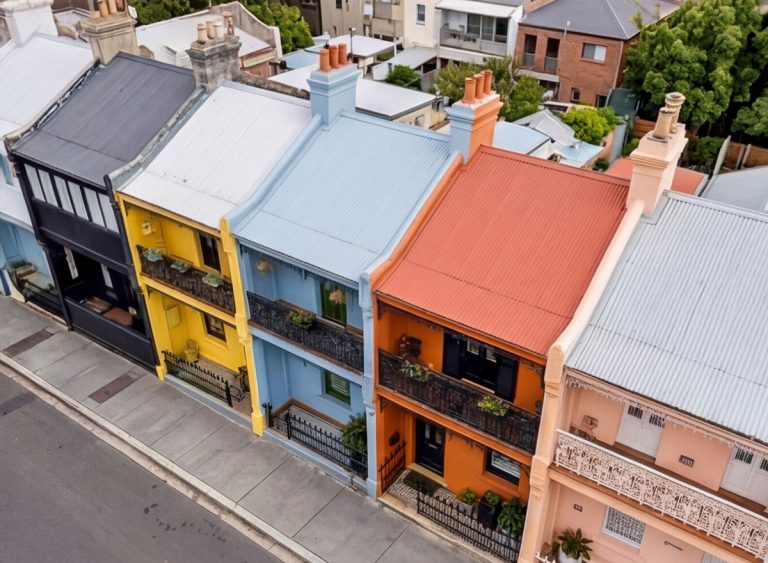
Historically, the Inner West developed as affordable housing for workers serving Sydney’s ports, rail corridors and factories, with modest terraces and brick and weatherboard cottages clustered around the industrial areas and freight infrastructure. Proximity to the CBD was originally a matter of convenience for dock and factory workers rather than an indicator of prestige, and housing was priced accordingly. The original subdivision patterns in suburbs such as Leichhardt, Balmain and Newtown delivered compact blocks, but also fine‑grained street grids, walkable village centres and a high degree of built character. Those physical fundamentals laid the groundwork for later gentrification as industrial uses retreated from the Harbour to cheaper land further afield whilst employment in professional services, education and health expanded in the CBD and surrounding precincts.
This evolution has resulted in the Inner West increasingly behaving less like an ‘alternative to’ Sydney’s prestige markets, and more like a continuation of them.
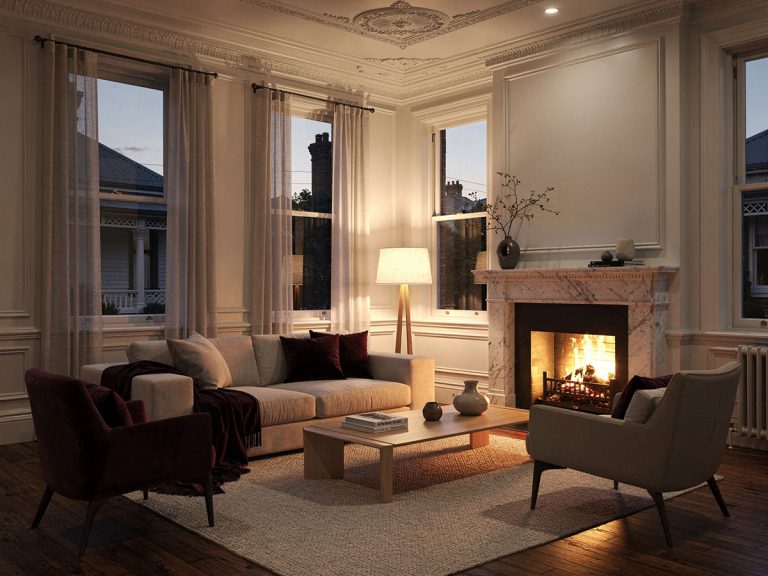
Over recent decades, successive waves of professional households and growing families have systematically upgraded the local housing stock. Modest workers’ cottages have been extended and renovated, sometimes several times, and whilst still appealing to professionals and growing families, upmarket downsizers, often from some of Sydney’s more affluent suburbs, have been flocking to areas like Balmain and Summer Hill over the past decade. Meanwhile, in the river and Harbour‑adjacent suburbs from Drummoyne through Russell Lea, Five Dock and Concord to Strathfield, newly built large family homes with basements, cinema rooms and high‑end finishes are now commonly transacting in the multi‑million‑dollar range. What began as incremental improvement has now resulted in a structurally different market, with prices that reflect both scarcity and amenity rather than their industrial past.
Where Inner West prices now sit
To understand why Sydney’s Inner West is increasingly the preserve of wealthier buyers, it is important to compare price levels and growth with the broader metropolitan market. Sydney‑wide, house prices have reached levels that place the city firmly at the top of Australia’s capital city price rankings. By contrast, Inner West Council area data shows median house price growth over recent years outpacing many middle‑ring regions and consolidating its position as one of Sydney’s more expensive sub‑markets.
Recent suburb‑level observations highlight just how far the Inner West has moved into prestige territory. For example, Haberfield’s median house price now sits at $3.25 million (according to the latest figures on realestate.com.au) based on the past 12 months of sales. In practical terms, that means even a relatively modest three‑bedroom character house in Haberfield commonly trades in the $3 million range, with larger homes achieving significantly more. Sydney’s median house price hit a record of a fasr more modest $1,759,909 (according to the latest Domain House Price Report).
A similar pattern is evident across other tightly held Inner West suburbs:
- Five Dock is now widely recognised as a key Inner West hotspot, with the median house price at $2,950,000 (according to the latest figures on realestate.com.au) and the unit median around $1,200,000.
- Many Inner West suburbs from Leichhardt to Marrickville and from Rozelle to Ashfield record house medians easily above $2 million, reflecting sustained demand from professionals, established families and downsizers.
- Premium pockets along the Parramatta River and around Concord and Strathfield routinely record individual house sales materially above the Sydney median, especially where renovation or new construction has delivered large contemporary dwellings. For example, the record house price in Concord is $7.7 million whilst in Strathfield it is $16.88 million.
When these figures are set against the broader Sydney median, it is apparent that much of the Inner West now sits at a clear premium to the rest of the city, particularly for freestanding family homes in school precincts or sought after heritage or village‑style locations.
Current pricing snapshot
The following comparison uses Sydney-wide median house price (Domain) as a benchmark against selected Inner West suburb medians (realestate.com.au):
| Suburb | Median House Price |
| Annandale | $2,400,000 |
| Balmain | $2,460,000 |
| Concord | $3,125,000 |
| Croydon | $2,435,000 |
| Five Dock | $2,950,000 |
| Haberfield | $3,250,000 |
| Leichhardt | $2,210,000 |
| Marrickville | $2,100,000 |
| Newtown | $2,250,000 |
| Petersham | $2,000,000 |
| Stanmore | $2,400,000 |
| Strathfield | $3,600,000 |
| Summer Hill | $2,500,000 |
| Sydney (all houses) | $1,759,909 |
These benchmarks demonstrate that the Inner West has moved into a higher price bracket relative to many other Sydney regions.
Structural drivers of Inner West capital growth
Several structural factors have combined to push Inner West house prices into multi‑million‑dollar territory and to keep them there, even through broader market fluctuations.
Firstly, location and connectivity are paramount. The Inner West sits immediately west of the CBD and the Pyrmont–Ultimo employment arc, with excellent access to major universities, hospitals and commercial precincts. Infrastructure investments such as motorway upgrades and public transport enhancements have further reduced travel times to the CBD and major employment hubs further afield, reinforcing the appeal of living closer to work, schools and lifestyle amenities.
Secondly, there is an entrenched scarcity of traditional family housing. Many Inner West suburbs are heavily built‑out, with strict planning controls aimed at protecting heritage streetscapes and limiting overdevelopment of character precincts. While some parts of the Inner West are seeing higher‑density infill and apartment construction, the supply of freestanding Federation, Edwardian and interwar houses on full blocks is effectively dwindling over time. When you combine that finite supply with a growing population of professionals prepared to compete aggressively for quality homes, the price pressure is substantial and persistent.
Thirdly, lifestyle has become a major economic driver. Inner West villages such as Leichhardt, Balmain, Summer Hill and Concord offer high‑street retail, hospitality, parks and waterfronts that appeal strongly to families and downsizers alike who prioritise walkable neighbourhoods over larger landholdings in more distant suburbs. That amenity premium has been capitalised into property values over time, as buyers increasingly pay for convenience, established greenery and community character as well as dwelling size.
Finally, broader macroeconomic and demographic trends have magnified these local advantages. Periods of low interest rates, strong population growth in Sydney, and the city’s position as a global destination for capital have all contributed to increased purchasing power at the top of the market. In practice, this means that the buyer pool for Inner West houses often includes not only local upgraders, but also high‑income professionals relocating from interstate or overseas and investors who are prepared to accept lower yields in exchange for potential long‑term capital growth.
These forces collectively explain the strong capital growth in the Inner West. While the Eastern Suburbs and Lower North Shore have long been viewed as the city’s premium benchmarks, the Inner West is increasingly trading in the same pricing conversation for comparable family homes when land size, character and location are taken into account.
Why the Inner West is pricing out middle‑income buyers
The combination of constrained supply, high amenity and strong demand has had a predictable consequence: many traditional low to middle‑income households now find the Inner West increasingly out of reach for freestanding homes. With house medians in prestige Inner West suburbs sitting well above $2 million, even dual‑income households with solid earnings face substantial deposit requirements and higher borrowing thresholds compared to outer or middle‑ring regions.
Investors have also played a meaningful role. Over the past decade, Inner West apartments, townhouses and smaller freestanding dwellings, have been attractive to “mum and dad” investors seeking a combination of rental demand, land value underpinning and long‑term capital growth. That investor competition has added another layer of demand on top of owner‑occupiers, particularly for properties close to transport, schools and village centres.
In practice, this means that in many Inner West auctions, aspiring owner‑occupiers must compete not only with each other, but also with cashed‑up downsizers as well as investors. Reserve prices are set with reference to strong recent sales, and bidders who have accrued significant equity in existing homes often enjoy a clear advantage over first‑time home buyers. The market dynamics therefore naturally favour wealthier purchasers with established balance sheets, reinforcing the reality that the Inner West is now primarily a destination for higher‑income buyers.
The impact of changing government policy and future price direction
Looking ahead, we consider that government policy settings and household balance sheet decisions are likely to further entrench the status of Sydney’s Inner West as an area that increasingly only the wealthy can buy into.
The recent Federal budget measures will tighten the tax environment for residential property investors, including changes to negative gearing and CGT. While the precise details are likely to move over time, the direction is towards reducing some of the more generous concessions that historically encouraged leveraged investment in relatively modestly priced properties. For “mum and dad” investors holding Inner West investment properties around the $1 million to $2 million price point, the cumulative impact of higher holding costs, stricter lending standards and softer yield outcomes may prompt a gradual realisation of those assets.
In our view, this has two very important implications for the Inner West.
Firstly, as some investors exit, the equity they release is likely to be redirected towards paying down or upgrading their Principal Place of Residence (“PPOR”). For long‑standing owners whose PPOR is already in the Inner West, this additional equity can be deployed to compete for larger, higher‑quality family homes in the same region. That will add further demand pressure at the upper end of the market, particularly for the kinds of properties that may be difficult to replicate under current planning controls.
Secondly, investor sales may create buying opportunities for owner‑occupiers, but not necessarily at lower price points. Where tenant demand remains strong and underlying land is scarce, we expect competition between first home buyers and owner‑occupiers for ex‑investment stock to keep prices robust, particularly in blue‑chip Inner West locations. In this context, any softening in investor demand could paradoxically consolidate the Inner West’s character as predominantly an owner‑occupier, high‑equity market.
The unique value of “can never be built again” character homes
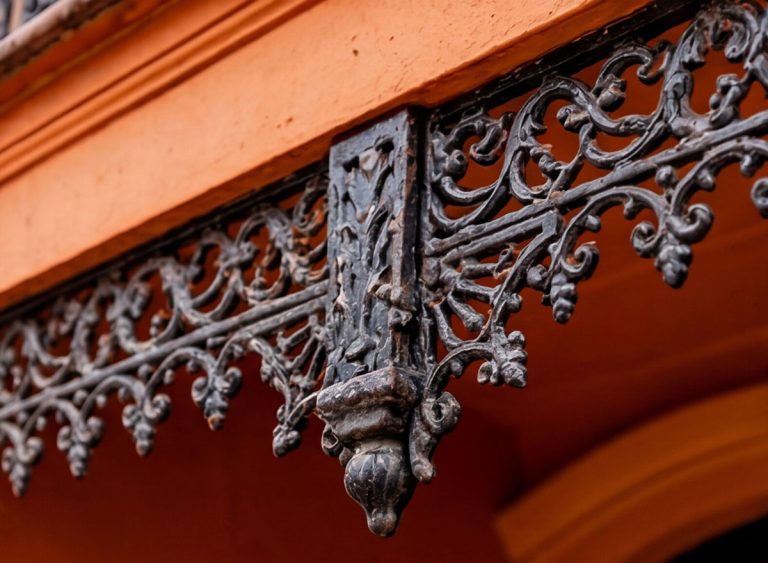
One of the most powerful long‑term drivers of Inner West house prices is the uniqueness of its character housing stock, especially in tightly controlled suburbs such as those on the Balmain Peninsula and Haberfield.
The Balmain Peninsula includes the suburbs of Balmain, Balmain East, Birchgrove and the eastern side of Rozelle. There is a finite supply of both land and existing homes.
Haberfield is well known as a heritage conservation area with a strong emphasis on preserving Federation‑era streetscapes, mature trees and consistent built form. Planning controls in such areas severely limit demolition and substantial redevelopment, which means that the existing houses are, in practical terms, a finite resource.
Over a five‑year horizon, a fairly conservative growth trajectory could see the median (currently $3.25 million) move materially higher. For example, at 5 per cent annual growth, the median would approach roughly $4.17 million in five years, while at 8 per cent it would exceed $4.75 million, illustrating the compounding effect of sustained growth rates in already high‑value markets. While actual outcomes will depend on interest rates, broader economic conditions and policy changes, the structural undersupply and desirability of such housing provides a strong underpinning for further price appreciation.
In our on‑the‑ground experience as buyers’ agents, this scarcity is most evident when well‑located character homes come to market in suburbs across the Inner West. Auction campaigns for properties that combine family‑friendly floorplans with period character and proximity to transport and schools routinely attract multiple registered bidders, including local upgraders, incoming high‑income buyers from other parts of Sydney and downsizers. For those households, the decision is not only about current affordability, but about securing an asset that cannot be reproduced in newer suburbs and that they expect to hold for decades.
What this means for prospective Inner West buyers
For prospective buyers considering Sydney’s Inner West, the implications of these trends are clear. Entry‑level price points for freestanding homes in many suburbs already sit beyond the reach of typical first‑home buyers, and further capital growth in character precincts is likely to entrench that exclusivity. At the same time, the fundamental appeal of the region in terms of proximity to the CBD, high‑quality schools, village centres, heritage streetscapes and limited new supply of equivalent homes, suggests that well‑selected Inner West properties will continue to perform strongly over the medium to long term.
In this environment, the role of experienced buyers’ agents is to identify enduring value and to help clients compete effectively in highly contested markets. We focus on:
- Targeting suburbs and streets where heritage protections, school catchments and infrastructure access combine to support long‑term demand.
- Differentiating between properties that simply reflect current market exuberance and those that offer genuine scarcity value because they cannot easily be replicated.
- Guiding buyers through pricing, negotiation and auction strategies that reflect both current conditions and the likely direction of Inner West policy and investment.
For many buyers, the question is no longer whether the Inner West is becoming an area that only the wealthy can buy into; the price and growth evidence already point firmly in that direction. The more relevant question is how to secure the right Inner West asset, at the right time, in a market where high‑quality opportunities are rare and competition is intense. As specialist buyers’ agents based in Leichhardt, we are well placed to assist buyers who recognise both the challenges and the long‑term rewards of securing a foothold in Sydney’s Inner West.
If you’re considering buying in Sydney’s Inner West, timing, strategy and local insight matter more than ever. In a market defined by scarcity, strong competition and rapidly rising benchmarks, the difference between securing the right property and missing out often comes down to preparation and execution. At Buyer’s Domain, we help buyers identify true value, understand where competition is most intense, and act decisively when the right opportunity appears.
For many buyers, early strategy conversations deliver the greatest advantage before a specific property decision is required. If you’re looking to secure a foothold in the Inner West, now is the time to get a clear plan in place before the next wave of demand and price growth moves the market further out of reach.