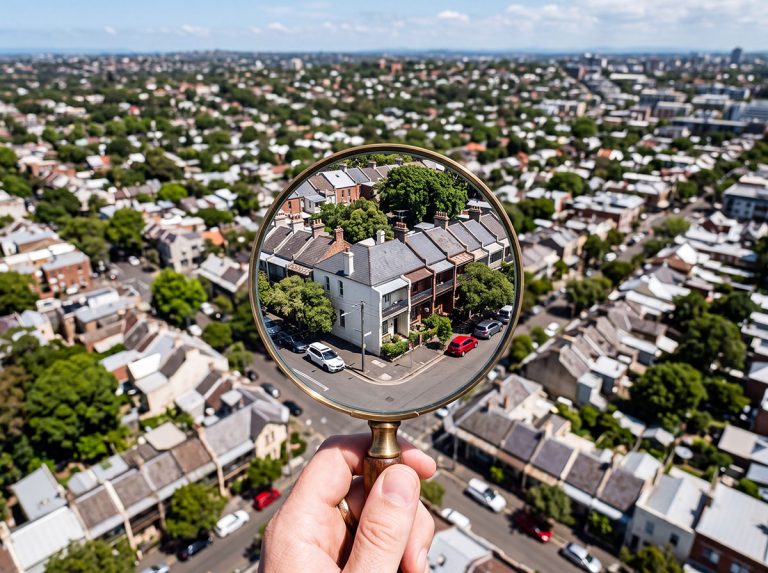
If you have been house-hunting in Sydney, you have probably experienced it: A property guided at $2m sells for $2.4m, or a terrace quoted at $1.6 million suddenly pushes past $1.9m at auction.
Many buyers walk away frustrated, wondering whether the property was deliberately underquoted or whether they simply misread the market.
In reality, the answer is usually more complex. Price guides are marketing tools rather than precise forecasts, and in competitive suburbs such as Sydney’s Inner West they often lag behind real buyer demand.
In this article we explain how price guides are set, how underquoting works, and how buyers can work out the true likely selling price before auction day
In Sydney, it is not unusual for properties to sell 5–15% above the price guide, and in competitive campaigns the gap can reach 20–30%.
This does not automatically mean the property was underquoted. Several structural factors contribute to the gap between guides and sale prices, including competitive auction campaigns, strong demand and the way agents set guides
How price guides are supposed to work
In New South Wales, selling agents are required to record an “estimated selling price” in their selling agreement with the vendor, usually expressed as a single figure or as a range with a maximum spread of ten per cent. That estimate should be based on recent comparable sales, current market evidence and feedback from early buyer enquiries.
Agents are not allowed to market property below the estimated selling price in online advertisements, brochures and statements of information. If new evidence emerges during the campaign that makes the estimate no longer reasonable (for example, a genuine pre-auction offer higher than the price guide), the agent is obliged to update the guide and ensure that all advertising reflects the new figure.
In summary, the legal definition of underquoting occurs when the advertised price is less than the agent’s estimated selling price. It is prohibited because it misleads buyers, inflates inspection numbers under false pretences and distorts the competitive process at auction.
The problem is that many buyers invest time, money and emotional energy into campaigns that were never realistically within reach. In theory, the regulatory framework should keep price guides aligned with likely outcomes. However, in practice, the gap between the price guide and result can be significant and gives rise to allegations of “underquoting” in Sydney even if the selling agent is not in breach of the legislation.
Why Sydney homes sell above the price guide
There are several structural reasons why homes often sell well above their guides, even where there is no deliberate underquoting in Sydney.
- Strong, pent-up demand: Sydney, and particularly inner-urban suburbs such as the Inner West, have chronic supply constraints relative to demand from upgraders, downsizers and investors. This competition translates into aggressive and competitive bidding for quality listings.
- Guides are for marketing and are not a valuation: A guide is designed to attract attention and generate enquiry. Agents know that a lower figure will broaden the pool of potential buyers, even if many of those buyers will ultimately be priced out.
- Vendor expectations and reserves: Vendors often have expectations that sit above the guide, sometimes significantly. The confidential reserve set shortly before auction can therefore be well above the published range, meaning that bidding has to surpass both guide and reserve before the property will sell.
- Momentum in rising markets: In rising markets, recent sales lag behind what buyers are willing to pay today. A guide anchored in even a three to six month-old dataset can be overtaken quickly as multiple parties stretch to secure scarce stock.
- Emotional decision-making: For many buyers, particularly those seeking a family home, emotions run high. After missing out on several campaigns, it is not uncommon for buyers to add a significant “stretch” to their budget, pushing results further above quoted levels.
The result is that even when price guides are technically compliant, sale prices can end up ten, twenty or even thirty per cent above the top of the advertised range on some properties, especially those with unique attributes such as freestanding character homes, large blocks, or in prime school catchments.
Underquoting and enforcement in New South Wales
Despite existing legislation, underquoting in Sydney remains a serious concern for property buyers. However, it can be challenging to prove that an agent’s estimate was unreasonable at a given moment in time, especially in fast-moving markets.
Regulators focus on more clear-cut issues such as:
- Whether the agent had access to clear comparable sales above the guide when the estimate was set.
- Whether the price guide was revised in a timely manner when strong buyer feedback or genuine offers emerged.
- Whether phrases such as “offers above” or “offers over” were used as this language is in breach of the legislation.
Public scrutiny has also increased. Media outlets periodically run investigations tracking the gap between price guides, reserves and final sale prices. Industry bodies and consumer advocates highlight egregious cases where reserves are set well above the top of the quoted range, which reinforces buyers’ perception that some campaigns are deliberately engineered to underquote.
Tougher penalties, greater transparency around comparable sales and more stringent record-keeping are being progressively introduced or considered to address these issues. However, from a buyer’s perspective, the safest assumption is that the guide may not reflect the true selling level, particularly in blue-chip suburbs.
Auction price guides versus for sale prices
There is an important distinction between auction price guides and “for sale” or private treaty asking prices.
At auction:
- The guide is nominally an estimate, not an asking price.
- Properties in high-demand Sydney suburbs often have guides that sit meaningfully below the eventual sale price.
- The competitive dynamic of a public auction can generate results that exceed both guide and expectations once bidders become emotionally invested.
In private treaty campaigns:
- The asking price is stated more explicitly, often as “Price: $X” or “For sale”.
- With certain selling agents, homes may sell at or below the asking figure, especially where the property has been on the market for some time.
- In strong markets, even private treaty campaigns can result in multiple offers above the asking price, effectively replicating auction dynamics behind closed doors.
For Sydney property buyers, the practical takeaway is that both forms of pricing are starting points for negotiation and analysis, rather than reliable indicators of value or where a transaction will conclude.
Regional nuances: Inner West and other key areas
The degree to which homes sell above the price guide varies markedly by region and price bracket.
In the Inner West, several characteristics amplify the gap:
- Limited supply of quality family homes on decent land, especially freestanding houses and renovated character terraces.
- High demand from professional couples, families and downsizers drawn to transport links, schools, cafes, medical facilities and proximity to the CBD.
- A culture of auction campaigns, which concentrates competition into a single event.
As a consequence, a house guided at, say, $2m dollars in a sought-after Inner West suburb for example, will frequently require a budget comfortably above that figure to be competitive. Depending on the specific street, land size, quality of renovation and school catchment, it is not unusual to see results from $100k to $500k above the top of the guide range when competition is strong.
By contrast, in parts of outer Sydney or regional New South Wales where supply is more plentiful, private treaty is more common and buyer competition is less intense, the gap between guide and sale price is often smaller. There, properties may sell close to the advertised figure, or even below, if they have been on the market for an extended period.
How much above the guide do homes usually sell for?
There is no universal number, but some broad patterns are observable across the Sydney market:
- In a balanced or slightly rising market, typical results on standard properties in good suburbs might sit around 5 – 10% above the top of the guide.
- In a strongly rising market or for particularly desirable homes, it is common to see results ten to twenty per cent above the top of the guide.
- Exceptional properties, or campaigns where the guide has remained artificially low throughout, can see results twenty to thirty per cent higher than the advertised range. This is not uncommon in sought after areas like the Inner West as discussed above.
Practical tips for working out how much to pay
Because of these dynamics, we recommend that property buyers build their own evidence-based view of value, rather than relying on the guide.
Key steps include:
- Build a robust comparable sales list: Identify three to six genuinely comparable properties that have sold in the past three to six months in the same suburb or immediate area. Adjust for differences in land size, number of bedrooms and bathrooms, parking, orientation, level of renovation and street quality.
- Track guides and outcomes: Keep a log of auction campaigns, noting the selling agent involved, the initial guide, any changes during the campaign, and the final sale price. Over time, this will reveal how particular agents and suburbs behave and give you a realistic sense of the typical gap.
- Watch on-the-ground indicators: Pay attention to the number of groups at open homes, the number of contracts issued, and the tone of agent feedback. Very busy opens and a large number of contract requests usually indicate that the end price will be materially above the guide.
- Analyse auction results weekly: Regularly review auction results in your target suburbs. Note the guide versus sale price on comparable properties and look for patterns, such as consistent ten to fifteen per cent gaps in specific precincts.
- Set a disciplined maximum price: After completing your valuation work and understanding your borrowing capacity, set a firm ceiling for each property. Decide this figure before you bid or start negotiations and adhere to it under pressure.
- Consider your opportunity cost: Factor in the cost of repeatedly missing out. In some cases, paying slightly above where you initially hoped to buy may be rational if it secures a high-quality, long-term home in a superior location.
The role of a professional buyer’s agent
Professional buyers’ agents add value in this environment by providing disciplined, data-driven advice and by insulating clients from the emotional pressures of competitive campaigns. Experienced buyers’ agents in Sydney’s Inner West and surrounding areas:
- Have been inspecting a much larger volume of properties than individual buyers can, often for many years, giving them a sharper sense of true market value.
- Understand how different auctioneers and agents behave, and can often anticipate likely reserve levels and bidding dynamics.
- Bid strategically at auction, keeping clients anchored to an evidence-based maximum rather than being drawn into impulsive last-minute increases.
By combining local knowledge, quantitative analysis and negotiation expertise, a good buyer’s agent can help you avoid systematically chasing underquoted properties and instead focus on opportunities where you can compete effectively within your budget.
Conclusion
In a market where Sydney homes frequently sell above the price guide, relying on advertised ranges without deeper analysis can lead to repeated disappointment or, worse, paying more than a property is worth. By building your own evidence-based view of value, understanding how price guides are set, and applying disciplined bidding strategies, you can navigate the market with far greater confidence.
After 17 years acting exclusively for property buyers in Sydney, we have seen thousands of auction campaigns and tracked the gap between guides and final sale prices across many suburbs.
If you are trying to work out what a property is really worth — rather than relying on the guide — we are happy to help.
If you are considering a specific property or upcoming auction, feel free to contact us for an independent view of likely selling price and bidding strategy.