It might surprise many people when I say that some of the best outcomes we achieve for our clients are the properties they never buy.
Over the years, I have advised clients to walk away from beautiful homes with spectacular views, renovated apartments, and properties they had already fallen in love with. Not because I wanted to keep searching but because the risk, or the price, simply didn’t stack up.
In reality, almost every decision to walk away comes down to one of two things: the property isn’t good enough, or the price is too high. Knowing the difference can save hundreds of thousands of dollars and years of regret.
Two core reasons to walk away
Almost every “walk away” recommendation falls into one of two categories.
- The property is fundamentally flawed: There are intrinsic issues with location, building quality, layout, or legal problems that materially increase risk or constrain future options. No price discount adequately compensates for a seriously flawed asset.
- The price is too high: The property is fundamentally sound, and we would be comfortable owning it, but the asking or likely sale price exceeds justified market value by a margin that materially erodes future returns.
Understanding which category applies is critical. It determines whether the property should be ruled out altogether or whether the right strategy is simply to wait for a better buying opportunity. In the current market, waiting long enough may see the vendors’ price expectations being lowered.
When the property is not good enough
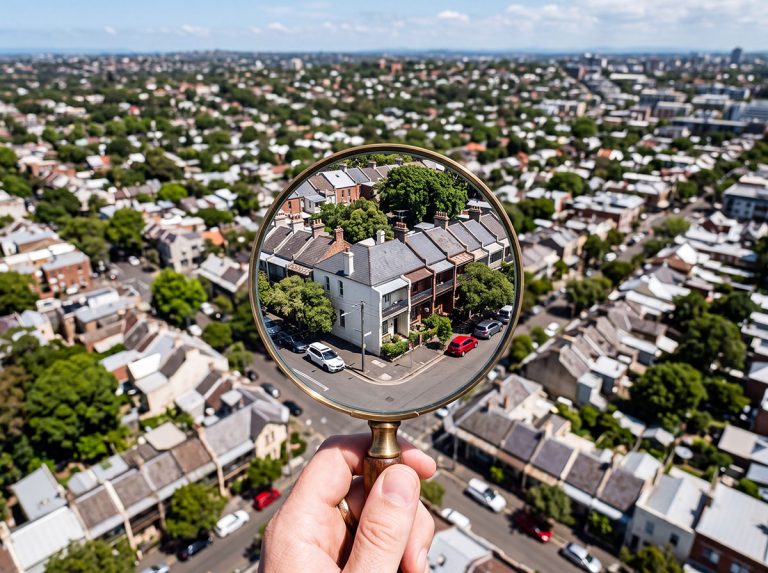
When undertaking a Full Search for our clients, our first responsibility is to filter out substandard properties before our clients invest time, money, and emotional energy. After thousands of inspections and helping hundreds of clients, we know what we’re looking for and can quickly eliminate properties that are fundamentally flawed or overpriced.
For clients who come to us with a property they have already found, we replicate the same rigorous due diligence to identify problems that may not be apparent at first inspection.
We will tell clients to walk away when one or more of the following applies:
- The risk cannot be eliminated with reasonable confidence.
- The problem cannot be remedied at a proportionate cost.
- The issue is fundamental to the property or location, rather than transient.
In these circumstances, not proceeding is usually the most conservative and financially responsible decision.
Compromised location
Location risk is one of the most common reasons we advise clients to walk away. The Sydney market rarely overlooks a compromised location. Over time, buyers tend to price these shortcomings with increasing precision. Properties in compromised positions often underperform even in rising markets. In softer markets like today’s, these compromises become even more apparent, with affected properties often taking significantly longer to sell.
Common red flags include:
- Immediate proximity to high‑impact road or rail corridors, aircraft noise, or industrial uses that materially affect amenity and resale appeal.
- Poor walkability to key amenities such as schools, transport, parks, and retail, relative to competing stock in the same suburb.
- Micro‑locations that are prone to flooding, crime, or persistent neighbour issues, which can be difficult to discern without local knowledge.
Even if a buyer is prepared to accept these trade‑offs, the future buyer pool may not be. Over time, this can translate to weaker capital growth, extended days on market, and greater vulnerability in downturns.
Building quality and condition issues
Building quality and condition are another cause of concern, particularly in the strata sector.
We will organise a strata search and we also recommend a building inspection, even for a strata property. We pay particular attention to:
- Structural defects such as cracking, movement, water ingress, or waterproofing issues, which often have high remediation costs and complex liability issues.
- Combustible cladding, fire safety defects, or other non-compliance issues that may require costly remediation and create uncertainty around future liabilities.
- Evidence of underfunded maintenance, where deferred works (for example, roofs, balconies, or common services) indicate future special levies or accelerated capital expenditure.
When building inspections reveal issues of this nature, we will either renegotiate aggressively to reflect the genuine cost and risk, or advise withdrawing entirely if the scale of the problem is uncertain or unmanageable. I usually try to attend the building inspection with the building inspector which allows me a far greater understanding of any defects. I still remember attending a building inspection in Lilyfield where the inspector removed bedding from inside a cupboard, revealing a major structural crack. It was virtually the only visible sign there was a serious problem with the property. The remediation costs would have been prohibitive, so my advice was simple: Keep searching. We commonly recommend walking away where:
- Strata records reveal ongoing disputes, litigation, or tribunal proceedings regarding defects, noise, or governance that signal entrenched conflict.
- The capital works fund is clearly inadequate for known upcoming projects, indicating a high likelihood of substantial future levies.
- The scheme has a track record of poor compliance or management, including repeated breaches, unapproved works, or unresolved defect claims.
These issues are not only financially significant; they also affect quality of life and resale appeal. Even if rectification is theoretically possible, the uncertainty and timeframes can impose an opportunity cost that is not justified for most buyers.
When the property is sound but the price is not
The more challenging scenario is when the property itself passes all due diligence, yet the vendors’ price expectations are too high. Sydney’s market can be emotionally charged, with buyers sometimes anchoring on outlier sales or competing aggressively for limited stock.
Buyers should avoid overpaying by researching comparable sales, understanding broader area trends, and seeking professional advice rather than relying on a single record result. When acting for our clients as buyers’ agents, our role is to provide that discipline and to recommend walking away when competition pushes pricing beyond rational limits.
We regard a property as overpriced where:
- Recent comparable sales, adjusted for differences in land, improvements, and condition, support a materially lower value range.
- The price implies assumptions that are inconsistent with local economic and demographic fundamentals. For example, a three-bedroom home priced like comparable four-bedroom properties, or a home priced in line with a superior neighbouring suburb.
In such cases, proceeding simply because the client “loves” the property is not consistent with prudent wealth management.
As buyers’ agents, we regularly attend auctions where we have a clear maximum bidding authority agreed well before auction day. Quite often, we walk away as the under bidder. But this is precisely why we agree on a limit before emotions take over. If the bidding moves beyond what we believe the property is worth, we have already made the decision. The auction does not change the value of the property; it simply tells us someone else was prepared to pay more than we were. That is not a reason to abandon discipline.
Market context: negotiating power in today’s Sydney market
In many parts of Sydney, buyers currently have more negotiating leverage than they realise, particularly following the interest rate rises and the Government’s recent budget announcements. Vendors who anchored their expectations to peak‑cycle results can struggle to adjust, leading to a gap between asking prices and what the market will actually bear.
In this environment, walking away from an overpriced property is often a strategic decision rather than a missed opportunity. Buyers with patience are increasingly being rewarded. Walking away is often a signal that the buyer understands the property’s limitations and is prepared to wait for a better combination of quality and price.
Why the best purchase is sometimes the one you never make
One of the hardest parts of buying property is knowing when not to buy, even when the property feels like “the one”. Given the scale of the financial commitment and the transaction costs involved in buying and selling, a single poor decision can have long‑lasting consequences.
By contrast, the discipline to walk away:
- Protects capital from being tied up in underperforming or high‑risk assets.
- Preserves borrowing capacity and flexibility for superior opportunities that may arise.
- Reduces the likelihood of future regret or costly rectification projects, particularly in strata environments.
As buyers’ agents, some of the most valuable outcomes we deliver are the properties our clients never buy. By applying structured due diligence and firm pricing assessment parameters, we ensure that when our clients do secure a property, they do so with clear eyes, controlled risk, and confidence that they have paid a rational price for an asset worthy of their long‑term wealth.
Sometimes the best investment decision isn’t the property you buy, it’s the one you have the discipline to walk away from.